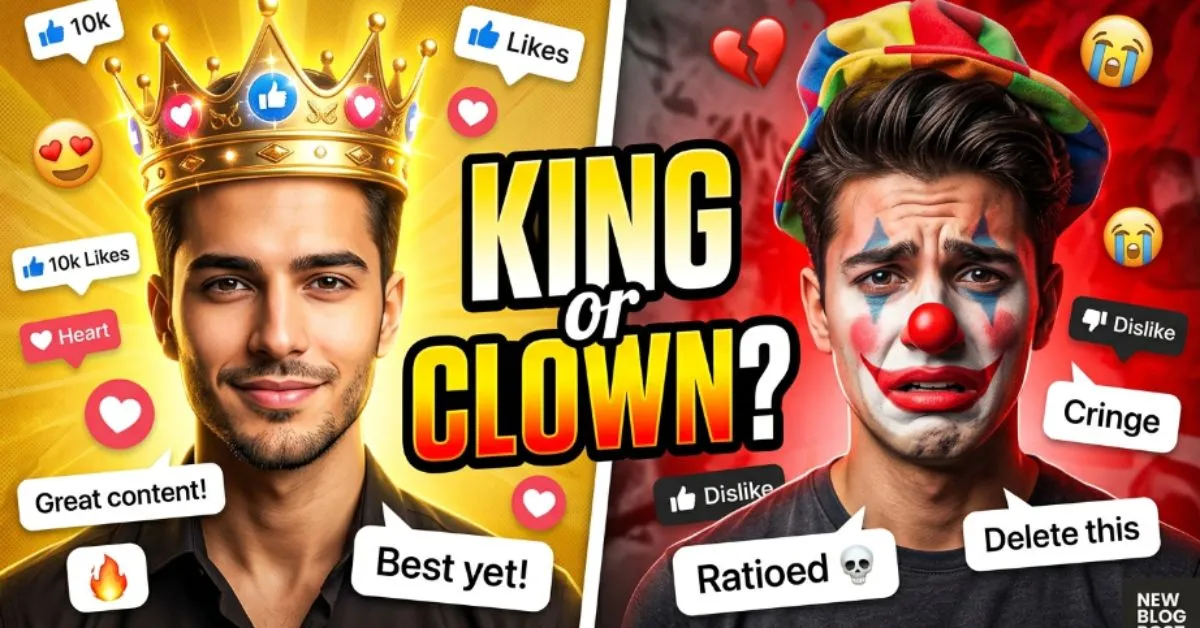
I still remember the first time I saw someone comment “You dropped this, king 👑” under a social media post. At first, I thought they were seriously calling the person royal or overly important. Then, only a few minutes later, I saw another comment calling someone a “clown 🤡” for making a bad decision online.
Honestly, I was confused.
Both words seemed emotional and dramatic, but people were using them in completely different ways. One sounded respectful and empowering, while the other felt insulting and embarrassing. Yet sometimes the same person could be called both depending on the situation.
That made me curious.
I started noticing these words everywhere:
TikTok comments
Twitter debates
Instagram captions
Sports discussions
Relationship advice videos
Suddenly, “king” and “clown” were not just normal dictionary words anymore. They had become powerful internet slang terms with completely different meanings depending on context and tone.
If you’ve ever wondered:
“Why do people say king?”
or
“What does clown mean online?”
you are definitely not alone.
The good news is that the difference is actually very simple once someone explains it clearly. In this guide, I’ll break down king vs clown in easy English so you can understand exactly when each word is positive, negative, funny, sarcastic, or supportive.
⚡ King or Clown – Quick Answer
“King” is usually a compliment online. It praises confidence, success, kindness, or self-respect.
“Clown” is usually an insult or joke. It describes someone acting foolish, embarrassing, or unserious.
Quick Examples:
✅ “You handled that perfectly, king.”
✅ “She knows her worth. Absolute queen.”
❌ “He lied again. What a clown.”
Simple Rule:
King = praise and respect
Clown = mockery or embarrassment
🤔 Why Do People Confuse King or Clown?
People confuse king and clown because both words are often used emotionally and sarcastically online.
In normal English:
- A king is a ruler.
- A clown is an entertainer.
But internet culture changed their meanings.
Today, “king” often means:
- confident person
- supportive friend
- emotionally strong man
- successful or respected person
Meanwhile, “clown” became slang for someone who:
- makes bad choices
- embarrasses themselves
- acts foolish online
- gets mocked by others
The confusion becomes bigger because people also use both words jokingly.
For example:
- “I’m a king for surviving Monday.”
- “I’m such a clown for texting my ex again.”
Social media adds even more confusion because tone is hard to detect online. Sometimes people use “king” sincerely. Other times they use it sarcastically.
The same happens with “clown.” It can be playful between friends or harsh during arguments.
That’s why context matters so much.
📜 The Origin of King or Clown
Both words have very old origins, but their internet meanings are much newer.
King
The word “king” comes from ancient Germanic languages and originally meant a male ruler or leader.
For centuries, kings represented:
- power
- authority
- leadership
- respect
Online culture later transformed “king” into slang used to encourage or praise someone.
Examples:
- “Stay strong, king.”
- “You deserve better, king.”
Social media helped popularize this supportive meaning, especially on Twitter, TikTok, and meme pages.
Clown
The word “clown” originally described comic performers who entertained audiences with jokes, costumes, and silly behavior.
Over time, people began using “clown” negatively to describe someone acting ridiculous or embarrassing.
Internet culture expanded the insult even further.
Today, calling someone a clown often means:
- immature
- foolish
- dishonest
- embarrassing
So while king became uplifting slang, clown became mocking slang.
🌍 British vs American English
Both British and American English use king and clown similarly online today.
However, internet slang usage is especially strong in the USA.
| Word | American English | British English | Modern Slang Meaning |
| King | Very common | Common | Respect or praise |
| Clown | Very common | Common | Foolish or embarrassing person |
Small Cultural Difference
In the USA, “king” is heavily connected to:
- confidence culture
- self-improvement
- supportive memes
In the UK, people sometimes use these words with stronger sarcasm or humor.
But overall, both meanings are widely understood globally thanks to social media.
🎯 Which One Should You Use?
The right choice depends completely on tone and situation.
Use “King” When:
- praising someone
- supporting confidence
- encouraging a friend
- complimenting success
Examples:
- “You did great, king.”
- “Know your value, king.”
Use “Clown” When:
- joking about mistakes
- criticizing foolish behavior
- teasing friends playfully
- reacting to embarrassing actions
Examples:
- “I locked myself out again. I’m a clown.”
- “That scammer is a total clown.”
For Bloggers and Freelancers
Using modern slang like king or clown can increase engagement with younger audiences.
But use them carefully in:
- professional articles
- business websites
- formal writing
For SEO
People search:
- “what does king mean in slang”
- “clown meaning online”
- “king vs clown meme meaning”
Using these phrases naturally can improve search visibility.
Best Practical Advice
Use:
- king for positivity
- clown for criticism or humor
Always think about tone before posting online.
❌ Common Mistakes (Avoid These!)
Here are the biggest mistakes people make.
Mistake #1: Thinking “King” Always Means Royalty
❌ “People literally think he’s a king.”
✅ Online slang usually means praise or admiration.
Mistake #2: Using “Clown” Too Aggressively
❌ Calling strangers clowns during serious discussions
✅ Remember it can sound insulting.
Mistake #3: Missing Sarcasm
❌ Assuming every “king” comment is sincere
✅ Some people use it jokingly.
Mistake #4: Using Slang in Formal Writing
❌ “The company CEO is a king.”
✅ Avoid slang in professional documents.
Mistake #5: Confusing Meme Language With Standard English
❌ Thinking dictionaries fully explain internet slang
✅ Online culture changes meanings quickly.
📝 Real Life Examples
Here’s how king or clown appears in daily life.
Emails
“Thank you for helping the team so much.”
(Formal writing usually avoids king or clown slang.)
Social Media
“You left a toxic relationship? King behavior 👑”
“I trusted that fake giveaway again. I’m such a clown 🤡”
News and Entertainment
“Fans called the athlete a king after his emotional speech.”
“The celebrity was mocked online and labeled a clown.”
Formal Writing
Formal writing usually avoids both slang meanings unless discussing internet culture directly.
📊 Quick Comparison Table
| Feature | King | Clown |
| Main Tone | Positive | Negative or funny |
| Internet Meaning | Praise | Mockery |
| Emotion | Respect | Embarrassment |
| Common Use | Supportive comments | Jokes or criticism |
| Often Used On | TikTok, Twitter, Instagram | Memes and arguments |
| Formal Usage | Rare | Rare |
| Emoji Connection | 👑 | 🤡 |
FAQs ❓
Q. What does king mean in slang?
King is usually a compliment that shows respect, support, or admiration.
Q. What does clown mean online?
Clown usually describes someone acting foolish, embarrassing, or dishonest.
Q. Is calling someone a clown rude?
Sometimes yes. It depends on tone and context.
Q. Why do people say “you dropped this king”?
It’s a supportive meme used to compliment someone confidently.
Q. Can king be sarcastic?
Yes. Some people use it jokingly or ironically online.
Q. Is clown always negative?
Not always. Friends sometimes use it playfully.
Q. Are king and clown internet slang?
Yes. Their modern meanings became popular through social media culture.
Q. Should I use king or clown in professional writing?
Usually no. These terms work better in casual online conversations.
🎯 Conclusion
Understanding king or clown becomes much easier once you focus on modern internet slang instead of traditional dictionary meanings.
Today, “king” is usually positive. People use it to praise confidence, kindness, emotional strength, or success. It has become one of the internet’s most popular supportive compliments.
“Clown,” on the other hand, is usually negative or humorous. It describes embarrassing behavior, foolish decisions, or people acting unserious online.
The reason many people get confused is because both words are heavily shaped by social media culture, sarcasm, memes, and tone. The same comment can sound supportive, funny, or insulting depending on context.
If you remember one simple rule, it becomes easy:
King = respect and praise
Clown = foolishness or mockery
That small difference can help you better understand online conversations, memes, TikTok comments, and modern internet culture without confusion again.

I’m Franz Kafka, an author at GrammarGuides.com, where I simplify English grammar for readers. As a grammar expert, I guide you through tricky rules and common mistakes.