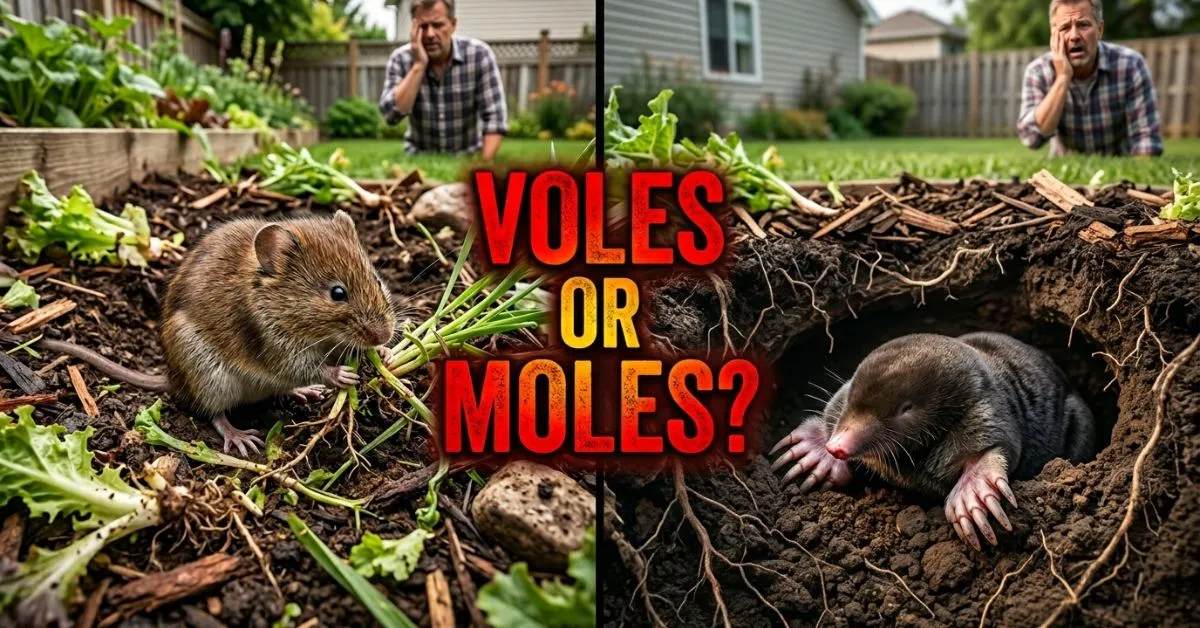
I still remember the first time I noticed strange trails and soft dirt piles in my backyard. At first, I thought, “Great… moles.” I had heard moles destroy lawns, so I instantly panicked. But then my neighbor looked closer and asked, “What if those are voles instead?” Honestly, I had no idea there was even a difference.
To me, voles and moles sounded almost identical. Both were tiny animals connected to tunnels, gardens, and yard damage. I assumed they were basically the same creature with different names. But once I started searching “voles or moles,” things became surprisingly confusing. Some articles showed mouse like animals chewing plants. Others showed blind digging animals creating tunnels underground.
That’s when I discovered something important: voles and moles are completely different animals and knowing which one you have matters a lot for protecting your yard. If you’ve ever wondered If you’re dealing with voles or moles, you are definitely not alone. Thousands of homeowners confuse them every year. The good news? Once you learn a few simple signs, identifying them becomes much easier.
In this guide, I’ll explain the real difference between voles or moles, why people confuse them, how to spot the signs, and the easiest tricks to tell them apart fast. By the end, you’ll never mix them up again.
⚡ Voles or Moles – Quick Answer
A vole is a small rodent that looks similar to a mouse and damages plants by chewing roots and stems.
A mole is a digging mammal that tunnels underground searching for insects and worms.
Quick Examples:
- Tiny mouse-like animal eating plants = likely a vole
- Raised dirt tunnels in lawns = likely a mole
- Moles dig; voles chew vegetation
🤔 Why Do People Confuse Voles or Moles?
People confuse voles and moles because their names sound very similar.
Both animals also:
- live close to the ground,
- create yard problems,
- and use tunnels.
That overlap causes confusion quickly.
Another reason is that homeowners often notice the damage before seeing the animal itself. When people spot:
- dead grass,
- tunnels,
- or damaged gardens,
they may not know which creature caused it.
The biggest difference is behavior.
Voles Usually:
- look like small mice,
- eat plants,
- and travel through surface runways.
Moles Usually:
- stay underground,
- eat insects,
- and create raised tunnels.
Once you understand what each animal actually does, the difference becomes much easier.
📜 The Origin of Voles or Moles
The word vole comes from Scandinavian and Nordic language roots describing small field rodents.
Voles became known for:
- fast breeding,
- crop damage,
- and underground nesting.
The word mole comes from Old English and Germanic roots. Historically, moles were famous for:
- digging,
- tunneling,
- and living underground.
Unlike spelling confusion topics like “gray vs grey,” voles and moles are different animals with separate meanings.
Today:
- voles are usually linked to gardens and plant damage,
- while moles are connected to tunnels and lawn destruction.
🌍 British vs American English
There is no spelling difference between British and American English for these words.
Both regions use:
- Vole
- Mole
Comparison Table
| Word | American English | British English | Meaning |
| Vole | Vole | Vole | Small rodent |
| Mole | Mole | Mole | Digging mammal |
The terminology stays the same worldwide.
🎯 Which One Should You Use?
Choose the correct term depending on the animal or damage you are describing.
Use “Vole” When:
- discussing plant damage,
- talking about mouse-like rodents,
- or describing surface trails in grass.
Use “Mole” When:
- discussing underground tunnels,
- talking about digging animals,
- or describing dirt mounds.
For Bloggers and SEO Writers
Correct terminology matters because search intent is very different.
Someone searching:
- “vole damage”
usually wants help protecting: - gardens,
- roots,
- and plants.
Someone searching:
- “mole tunnels”
usually wants lawn repair or pest-control information.
Using accurate wording improves:
- SEO rankings,
- reader trust,
- and search relevance.
For Freelancers and Content Creators
Home and gardening content becomes much more professional when the animal is identified correctly.
❌ Common Mistakes (Avoid These!)
Many homeowners accidentally confuse voles and moles.
Mistake #1: Thinking Voles and Moles Are the Same Animal
❌ Wrong: “Voles are just another kind of mole.”
✅ Correct: “They are completely different animals.”
Mistake #2: Calling Every Tunnel a Mole Tunnel
❌ Wrong: “All lawn trails are from moles.”
✅ Correct: “Some shallow trails may come from voles.”
Mistake #3: Ignoring Eating Habits
❌ Wrong: “Moles destroy plants by eating roots.”
✅ Correct: “Voles commonly chew plants and roots.”
Mistake #4: Assuming Moles Eat Grass
❌ Wrong: “Moles survive on grass and flowers.”
✅ Correct: “Moles mostly eat insects and worms.”
Mistake #5: Misidentifying Appearance
❌ Wrong: “Moles look like tiny mice.”
✅ Correct: “Voles resemble mice much more than moles do.”
📝 Real Life Examples
Here’s how voles and moles are used correctly in everyday writing.
Emails
- “We noticed possible mole tunnels near the backyard.”
- “Voles damaged several garden plants this spring.”
Social Media
- “My lawn suddenly has raised mole trails everywhere.”
- “Tiny voles keep chewing my flower roots.”
News and Gardening Content
- “Mole activity increases in moist soil conditions.”
- “Voles can seriously damage crops and gardens.”
Formal Writing
- “Moles help aerate soil through tunneling.”
- “Voles feed heavily on vegetation and root systems.”
🔍 Voles vs Moles: The Main Difference
Here’s the easiest way to understand the difference.
| Feature | Vole | Mole |
| Animal Type | Rodent | Insect-eating mammal |
| Appearance | Mouse-like | Digging animal with large paws |
| Main Diet | Plants and roots | Worms and insects |
| Tunnel Style | Surface runways | Deep underground tunnels |
| Eyes | Visible | Tiny and hard to notice |
| Damage Type | Plant destruction | Lawn tunneling |
| Activity Area | Near surface | Underground |
This comparison makes identification much easier.
🌱 Why Voles Damage Gardens
Voles are small but surprisingly destructive.
They commonly eat:
- roots,
- bark,
- grass,
- vegetables,
- and flowers.
During colder months, voles may hide under snow and chew tree bark without homeowners noticing.
Because they reproduce quickly, small vole problems can grow fast.
That’s why gardeners often worry about vole infestations around:
- flower beds,
- farms,
- and landscaping.
🕳️ Why Moles Dig So Much
Moles are expert diggers.
Their powerful front paws help them create:
- tunnels,
- underground pathways,
- and hunting areas.
Unlike voles, moles are usually searching for:
- worms,
- grubs,
- and insects.
Moles do not usually eat plants directly.
However, their tunnels can:
- damage lawns,
- disturb roots,
- and create soft uneven ground.
That’s why many homeowners notice moles after seeing raised ridges across grass.
⚡ How to Tell the Difference Fast
Here’s the simplest trick homeowners use.
Look at the Damage
Voles:
- chew plants,
- damage roots,
- create narrow surface trails.
Moles:
- create raised tunnels,
- leave dirt mounds,
- rarely eat vegetation.
Look at the Animal
Voles:
- small,
- furry,
- mouse-like.
Moles:
- pointed noses,
- huge digging paws,
- tiny hidden eyes.
This simple comparison makes identification much faster.
📊 Quick Comparison Table
| Term | Meaning | Category | Common Usage | Region |
| Vole | Small plant-eating rodent | Animal | Gardens, crops | Worldwide |
| Mole | Digging insect-eating mammal | Animal | Lawns, tunnels | Worldwide |
FAQs ❓
Q. Are voles and moles the same?
No. Voles are rodents, while moles are digging mammals.
Q. Which is worse for lawns: voles or moles?
Moles damage lawns with tunnels, while voles damage plants and roots.
Q. Do moles eat plants?
Usually no. Moles mainly eat insects and worms.
Q. What do voles look like?
Voles resemble small mice with short tails.
Q. Why do moles dig tunnels?
They tunnel to search for insects and worms underground.
Q. Can voles damage trees?
Yes. Voles may chew bark and roots, especially in winter.
Q. Are moles blind?
Moles have tiny eyes and poor eyesight, but they are not completely blind.
Q. How can I tell if I have voles or moles?
Check the damage. Plant chewing suggests voles. Raised tunnels suggest moles.
Conclusion 🎯
Understanding the difference between voles or moles becomes much easier once you focus on what they actually do.
Voles are:
- small rodent-like animals,
- plant eaters,
- and garden destroyers.
Moles are:
- underground diggers,
- insect hunters,
- and tunnel creators.
People confuse them because:
- their names sound similar,
- both affect yards,
- and both use tunnels.
But the damage patterns are completely different.
The easiest trick to remember is simple:
- chewing plants = vole,
- digging tunnels = mole.
Now, the next time you spot strange yard damage, you won’t have to panic or guess randomly.
You’ll know exactly what signs to look for and whether you’re dealing with voles or moles.
Discover More Articles:
- Hims or BlueChew : The Simple Truth About Performance & Confidence💪
- 📚 Nook or Kindle : The Real Answer That Can Save You From Buyer’s Regret
- 📚 Melville or McCarthy : The Dark Truth About These Literary Giants

I’m Franz Kafka, an author at GrammarGuides.com, where I simplify English grammar for readers. As a grammar expert, I guide you through tricky rules and common mistakes.