I still remember the moment I completely panicked in my backyard. A black-and-yellow insect started flying around my drink, and I instantly yelled, “Bee!” Then my friend laughed and said, “That’s not a bee… it’s a wasp.” Honestly, I was shocked. To me, bees and wasps always looked the same. They both buzzed, flew fast, and had scary stingers. I thought there was no real difference between them.
But after that embarrassing moment, I finally decided to learn the truth about bee or wasp confusion. And the more I researched, the more surprising it became. It turns out bees and wasps are very different in behavior, appearance, and even personality. One helps pollinate flowers and usually avoids trouble. The other can be more aggressive and is often attracted to sugary food at picnics.
If you’ve ever wondered whether you’re looking at a bee or a wasp, you’re definitely not alone. Millions of people confuse them every year. The good news? Once you learn a few simple signs, telling them apart becomes incredibly easy.
In this guide, I’ll explain the differences clearly, simply, and without complicated science words.
⚡ Bee or Wasp – Quick Answer
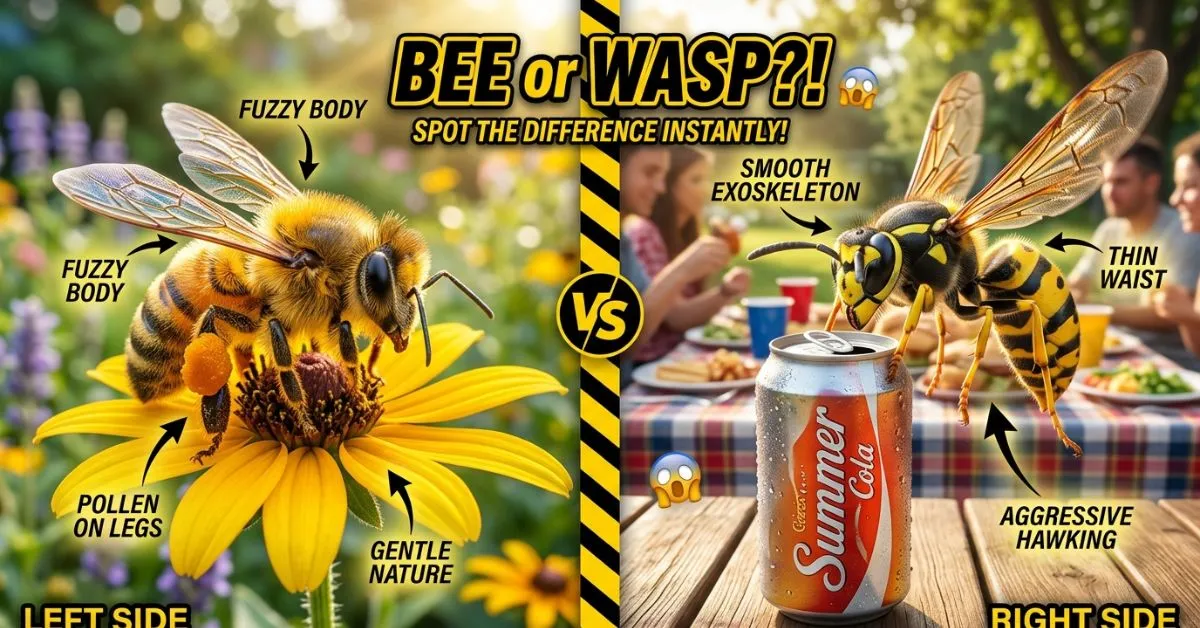
A bee is usually fuzzy, rounder, and focused on flowers and pollination.
A wasp is smoother, thinner, and often more aggressive.
Quick Examples:
- Fuzzy yellow insect on flowers = likely a bee
- Thin shiny insect near soda cans = likely a wasp
- Bees help plants grow; wasps hunt insects and scavenge food
🤔 Why Do People Confuse Bee or Wasp?
People confuse bees and wasps because they share similar colors and body shapes.
Both insects often:
- have black-and-yellow stripes,
- fly quickly,
- buzz loudly,
- and can sting.
From far away, they can look almost identical.
Another reason is fear. When most people see a flying stinging insect, they don’t stop to study it carefully. They just call it a “bee” and move away quickly.
Movies, cartoons, and social media also add confusion. Many people incorrectly label wasps as bees online.
The biggest difference is body shape:
- Bees look fuzzy and chunky
- Wasps look smooth and skinny
Once you notice that, spotting the difference becomes much easier.
📜 The Origin of Bee or Wasp
The word bee comes from ancient Germanic and Old English roots. Humans have known bees for thousands of years because bees produce honey and help pollinate crops.
The word wasp also comes from Old English. Historically, wasps were known more for hunting insects and delivering painful stings.
Unlike spelling confusion topics such as “color vs colour,” the confusion between bee and wasp comes from appearance — not spelling.
Over time, both insects became important in farming, gardening, and nature studies.
Today:
- bees are often associated with pollination and honey,
- while wasps are commonly linked to nests and stings.
🌍 British vs American English
There is no spelling difference between British and American English here.
Both regions use:
- Bee
- Wasp
Comparison Table
| Word | American English | British English | Meaning |
| Bee | Bee | Bee | Pollinating insect |
| Wasp | Wasp | Wasp | Predatory stinging insect |
The terms stay the same worldwide.
🎯 Which One Should You Use?
Use the correct word depending on the insect you are describing.
Use “Bee” When:
- talking about pollination,
- honey production,
- gardens,
- or fuzzy flower-loving insects.
Use “Wasp” When:
- describing aggressive stinging insects,
- discussing paper nests,
- or talking about thin-bodied flying insects.
For Bloggers and SEO Writers
Using the right term matters because people search for different information.
Someone searching:
- “How to save bees”
usually wants environmental information.
Someone searching:
- “How to remove wasps”
is probably worried about nests or stings.
Correct terminology improves:
- SEO rankings,
- reader trust,
- and search intent accuracy.
For Freelancers and Content Creators
Nature and pest-control articles perform better when the insect is identified correctly.
Accuracy makes content look professional and trustworthy.
❌Common Mistakes (Avoid These!)
Many people accidentally misuse bee and wasp terms.
Mistake #1: Calling Every Flying Insect a Bee
❌ Wrong: “That aggressive yellow insect is definitely a bee.”
✅ Correct: “It might actually be a wasp.”
Mistake #2: Thinking Bees Are Always Dangerous
❌ Wrong: “All bees attack people.”
✅ Correct: “Most bees avoid humans unless threatened.”
Mistake #3: Assuming Wasps Make Honey
❌ Wrong: “Wasps produce honey like bees.”
✅ Correct: “Honey production is mainly associated with bees.”
Mistake #4: Ignoring Body Shape
❌ Wrong: “Bees and wasps look identical.”
✅ Correct: “Wasps are usually thinner and shinier.”
Mistake #5: Disturbing Nests
❌ Wrong: “I poked the nest to see what was inside.”
✅ Correct: “Never disturb insect nests.”
📝 Real Life Examples
Here’s how people use bee and wasp correctly in daily life.
Emails
- “We found a wasp nest near the garage.”
- “The garden attracts many bees during spring.”
Social Media
- “This fuzzy bee is collecting pollen from my flowers.”
- “A wasp stole my picnic food again.”
News and Environmental Writing
- “Bee populations remain important for agriculture.”
- “Wasp activity increases during late summer.”
Formal Writing
- “Bees play a critical role in pollination.”
- “Wasps help control other insect populations.”
🔍 How to Tell the Difference Fast
Here’s a simple trick many people use.
Look at the Body
Bees:
- fuzzy,
- thick,
- rounded,
- softer-looking.
Wasps:
- smooth,
- shiny,
- narrow waist,
- longer legs.
Look at Behavior
Bees:
- stay near flowers,
- gather pollen,
- avoid conflict.
Wasps:
- hover around food,
- chase sugary drinks,
- defend nests aggressively.
Look at the Nest
Bee Nests:
- wax like honeycombs,
- often hidden in hives.
Wasp Nests:
- papery gray nests,
- hanging from roofs or trees.
These small clues make identification much easier.
⚠️ Are Bees or Wasps More Dangerous?
This is one of the most searched questions online.
Generally:
- bees sting mainly for defense,
- while wasps can sting multiple times and act more aggressively.
Honeybees often die after stinging because their stinger gets stuck.
Wasps can sting repeatedly without dying.
However, both can be dangerous for people with allergies.
Call emergency services immediately if someone experiences:
- trouble breathing,
- swelling,
- dizziness,
- or severe allergic reactions after a sting.
🌼 Why Bees Matter So Much
Bees are incredibly important for nature and farming.
They help pollinate:
- fruits,
- vegetables,
- flowers,
- and crops.
Without bees, many plants would struggle to grow properly.
That’s why environmental groups work hard to protect bee populations.
Wasps also help ecosystems by controlling pest insects, but bees are usually more loved because of their role in pollination and honey production.
📊 Quick Comparison Table
| Feature | Bee | Wasp |
| Body Shape | Round and fuzzy | Thin and smooth |
| Personality | Usually calm | More aggressive |
| Main Role | Pollination | Hunting insects |
| Food Interest | Flowers | Sugary foods |
| Sting Style | Usually once | Multiple times |
| Nest Type | Wax hive | Paper nest |
| Honey Production | Yes | No |
| Region | Worldwide | Worldwide |
FAQs ❓
Q. How can I tell if it’s a bee or wasp?
Look for body shape. Bees are fuzzy and round. Wasps are smooth and skinny.
Q. Which hurts more: bee or wasp sting?
Wasp stings are often considered more painful because wasps can sting repeatedly.
Q. Do bees attack humans?
Most bees avoid humans unless they feel threatened.
Q. Why are wasps attracted to food?
Wasps love sugary foods and drinks, especially during summer.
Q. Do wasps help the environment?
Yes, wasps help control harmful insect populations.
Q. Can bees sting more than once?
Honeybees usually sting once, but some bee species can sting multiple times.
Q. Are all yellow insects bees?
No. Many striped insects are actually wasps or hornets.
Q. Should I remove a wasp nest myself?
Large nests should usually be handled by professionals.
🎯 Conclusion
Understanding the difference between bee or wasp is much easier once you know what to look for.
Bees are usually fuzzy, round, calm, and focused on flowers and pollination. They play a huge role in helping plants, crops, and ecosystems survive.
Wasps, on the other hand, are smoother, thinner, and often more aggressive. They are commonly seen around sugary foods, outdoor drinks, and paper nests.
The easiest trick to remember is simple:
- fuzzy and flower-loving = bee,
- shiny and skinny = wasp.
Many people confuse them because both insects have similar colors and can sting. But once you notice body shape and behavior, the difference becomes obvious.
The next time you hear buzzing nearby, you won’t have to panic or guess. You’ll know exactly whether you’re looking at a bee or a wasp.
And that tiny bit of knowledge can make outdoor life much less stressful.
Discover More Articles:
- Tough or Tuff : The Simple Guide for Writers and Social Media💪(2026)
- Focussing or Focusing : Simple Answer (With Examples)🎯(2026)
- Passtime or Pastime : Common Spelling Mistake Explained✍️(2026)

I’m Dan Brown, an author behind GrammarGuides.com, where I share simple tips to help people write English clearly and correctly. As a grammar expert, I enjoy explaining tricky words, spelling differences, and common language mistakes in an easy way.