I still remember the moment I panicked after spotting tiny insects crawling near my window. At first, I thought they were just ants. Honestly, I didn’t worry much because ants are common in homes. But then a friend asked me a terrifying question:
“What if they’re termites?” Suddenly, I couldn’t stop thinking about it.
I started searching online for “termite or ant,” and the confusion became even worse. Some pictures looked identical. Both insects were small, dark, and crawling in groups. I honestly couldn’t tell the difference.
That’s when I discovered something surprising:
termites and ants may look similar at first glance, but they are completely different insects and one can seriously damage your home.
If you’ve ever stared at tiny bugs and wondered whether you’re dealing with termites or ants, you are definitely not alone. Thousands of homeowners confuse them every year.
The good news? Once you know a few simple signs, telling them apart becomes much easier.
In this guide, I’ll explain the real difference between termites and ants, why people confuse them, warning signs to watch for, and the easiest tricks to identify them fast.
By the end, you’ll never mix them up again.
⚡ Termite or Ant – Quick Answer
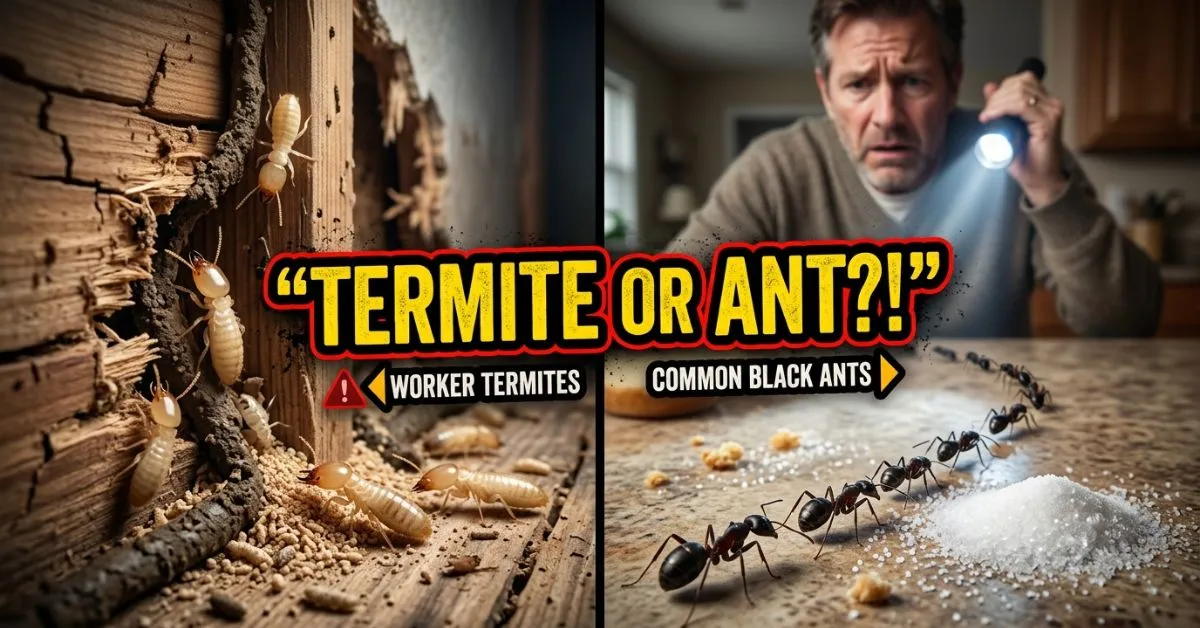
A termite is a wood-eating insect that can damage homes. An ant is a common insect that usually searches for food and builds colonies.
Quick Examples:
- Straight body and equal wings = likely a termite
- Narrow waist and bent antennae = likely an ant
- Wood damage inside walls often points to termites
🤔 Why Do People Confuse Termite or Ant?
People confuse termites and ants because they can look very similar, especially during swarm season.
Both insects:
- are small,
- live in colonies,
- and sometimes grow wings.
Flying termites are especially confusing because they resemble flying ants.
Another reason is panic. When homeowners suddenly see insects indoors, they often don’t examine small details carefully.
The biggest confusion comes from body shape.
Ants Usually Have:
- a thin “pinched” waist,
- bent antennae,
- uneven wing sizes.
Termites Usually Have:
- straight bodies,
- straight antennae,
- equal-sized wings.
Once you notice these differences, identification becomes much easier.
📜 The Origin of Termite or Ant
The word ant comes from Old English and has been used for centuries to describe hardworking social insects.
Ants are famous for:
- teamwork,
- food gathering,
- and underground colonies.
The word termite comes from Latin roots meaning “woodworm” or “wood eater.”
That name makes sense because termites feed on wood and cellulose materials.
Unlike spelling confusion topics such as “gray vs grey,” termite and ant are completely different insect names.
Over time:
- ants became symbols of hard work,
- while termites became associated with property damage.
Today, termites are one of the biggest pest concerns for homeowners in the USA.
🌍 British vs American English
There is no spelling difference between British and American English here.
Both regions use:
- Termite
- Ant
Comparison Table
| Word | American English | British English | Meaning |
| Termite | Termite | Termite | Wood-eating insect |
| Ant | Ant | Ant | Common colony insect |
The terminology stays the same worldwide.
🎯 Which One Should You Use?
Use “Ant” When:
- talking about food-searching insects,
- discussing ant hills,
- or describing insects with narrow waists.
Use “Termite” When:
- discussing wood damage,
- home infestations,
- or insects with straight bodies and equal wings.
For Bloggers and SEO Writers
Correct terminology matters because search intent is very different.
Someone searching:
- “How to kill ants”
usually wants quick pest-control advice.
Someone searching:
- “Signs of termites”
is likely worried about expensive home damage.
Using the wrong term can confuse readers and hurt SEO performance.
For Freelancers and Content Creators
Home improvement and pest-control articles need accurate insect identification to build trust and authority.
❌ Common Mistakes (Avoid These!)
Many people accidentally confuse termites and ants.
Mistake #1: Thinking Flying Ants Are Always Ants
❌ Wrong: “All winged insects indoors are ants.”
✅ Correct: “Some may actually be termites.”
Mistake #2: Ignoring Wood Damage
❌ Wrong: “Tiny holes in wood are harmless.”
✅ Correct: “Wood damage may signal termites.”
Mistake #3: Looking Only at Color
❌ Wrong: “They’re black, so they must be ants.”
✅ Correct: “Body shape matters more than color.”
Mistake #4: Confusing Antenna Shapes
❌ Wrong: “All insect antennae look the same.”
✅ Correct: “Ants have bent antennae; termites have straight ones.”
Mistake #5: Delaying Inspection
❌ Wrong: “I’ll check later.”
✅ Correct: “Possible termite signs should be inspected quickly.”
📝 Real Life Examples
Here’s how termite and ant are used correctly in daily conversations.
Emails
- “We scheduled a termite inspection for the basement.”
- “Ants keep appearing near the kitchen sink.”
Social Media
- “Please tell me these are ants and not termites.”
- “Found a line of ants near the picnic table.”
News and Homeowner Content
- “Termite damage costs homeowners billions every year.”
- “Ant infestations increase during warmer months.”
Formal Writing
- “Termites can weaken wooden structures over time.”
- “Ant colonies are highly organized social systems.”
🔍 How to Tell the Difference Fast
Here’s the easiest trick to identify them quickly.
Look at the Waist
Ants:
- narrow waist,
- segmented body,
- clearly divided shape.
Termites:
- thick straight body,
- no narrow waist,
- tube-like appearance.
Look at the Antennae
Ants:
- bent or elbow-shaped.
Termites:
- straight antennae.
Look at the Wings
Flying Ants:
- front wings larger than back wings.
Flying Termites:
- all wings equal length.
These simple details make a huge difference.
⚠️ Which One Is More Dangerous?
This is one of the biggest questions homeowners ask.
Ants
Most ants are annoying but not highly destructive. They usually search for:
- sugar,
- crumbs,
- and food scraps.
Some species can bite or sting, but many are mostly harmless.
Termites
Termites are far more dangerous to buildings.
They can:
- silently eat wood,
- damage walls,
- weaken floors,
- and create expensive structural problems.
The scary part is that termite damage often stays hidden for years.
That’s why early detection matters so much.
🏠 Signs You May Have Termites
Here are some warning signs homeowners should never ignore:
- Hollow-sounding wood
- Mud tubes near walls
- Discarded wings
- Tiny holes in wood
- Sagging floors
- Bubbling paint
- Clicking sounds inside walls
If you notice these signs, professional inspection is highly recommended.
🥖Why Ants Enter Homes
Ants usually invade homes searching for:
- food,
- water,
- or shelter.
Common causes include:
- crumbs,
- sugary spills,
- pet food,
- and moisture.
Keeping kitchens clean often helps reduce ant problems quickly.
Unlike termites, ants usually don’t destroy wooden structures.
📊 Quick Comparison Table
| Feature | Termite | Ant |
| Body Shape | Straight | Narrow waist |
| Antennae | Straight | Bent |
| Wing Size | Equal | Unequal |
| Main Interest | Wood | Food |
| Damage Risk | High | Usually low |
| Common Location | Walls, wood | Kitchens, outdoors |
| Colony Style | Hidden | Visible trails |
| Region | Worldwide | Worldwide |
FAQs ❓
Q. How can I tell if it’s a termite or ant?
Look at the waist and antennae. Ants have narrow waists and bent antennae. Termites do not.
Q. Are termites worse than ants?
Yes. Termites can cause serious structural damage to homes.
Q. Do termites bite humans?
Rarely. Their main focus is eating wood.
Q. Why do termites have wings?
Flying termites use wings during mating and colony expansion.
Q. Can ants damage wood?
Some carpenter ants can damage wood, but termites are usually more destructive.
Q. What attracts termites?
Moisture, wood, and cellulose materials attract termites.
Q. Are flying ants dangerous?
Most flying ants are harmless nuisance insects.
Q. Should I call pest control for termites?
Yes. Professional treatment is strongly recommended.
Conclusion 🎯
Understanding the difference between termite or ant can save homeowners a lot of stress and potentially thousands of dollars.
At first glance, these insects can look very similar. Both are small, social, and sometimes winged. But the differences become obvious once you know what to watch for.
Ants usually have:
- narrow waists,
- bent antennae,
- and uneven wings.
Termites usually have:
- straight bodies,
- straight antennae,
- and equal-sized wings.
The biggest difference is damage risk.
Ants are usually searching for food. Termites are searching for wood and that can become a serious problem for homes and buildings.
The easiest trick to remember is simple:
- skinny waist = ant,
- straight body = termite.
Now, the next time you spot tiny insects around your home, you’ll know exactly what signs to check instead of guessing in panic.
And that knowledge can make all the difference.
Discover More Articles:
- 🌶️ Kimchee or Kimchi : Here’s the Correct Spelling Explained
- 🍭 Sweet or Sweat : The Fastest Way to Remember the Difference Forever
- 🍪 Macaron or Macaroon : One Tiny Letter Changes Everything