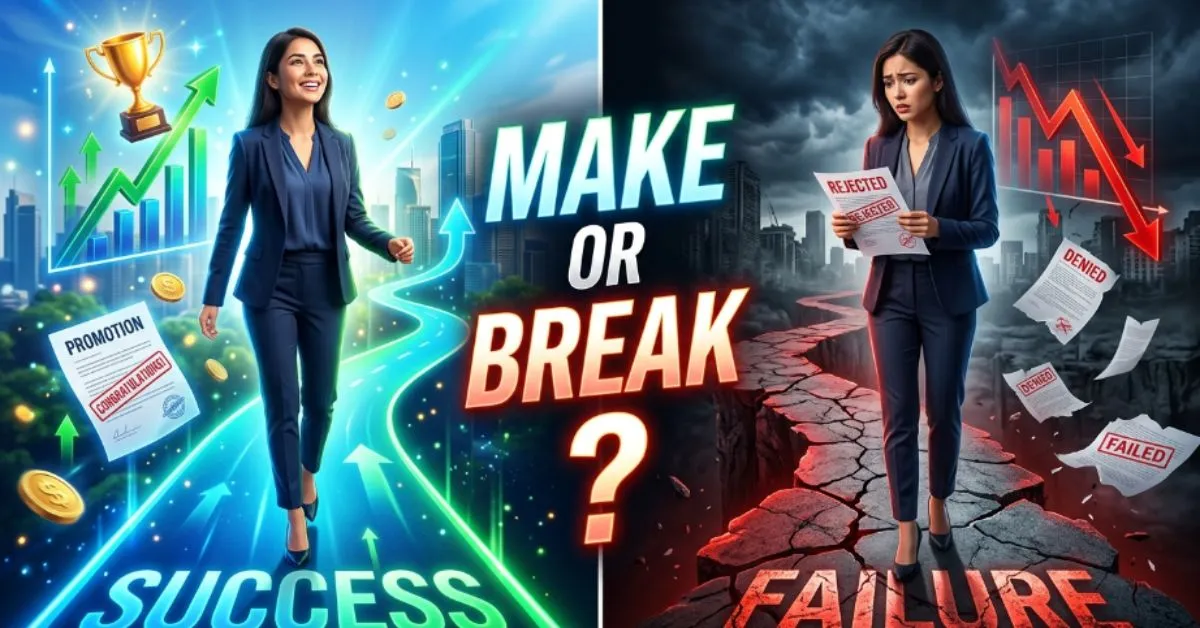
I still remember sitting in a meeting where a manager said, “This presentation could make or break the deal.” At the time, I nodded as if I fully understood the phrase. Later that day, I realized something surprising: I wasn’t entirely sure what “make or break” actually meant.
Was it describing success versus failure? Was it a business term? Or was it simply an expression people used for dramatic effect?
The more I looked into it, the more I noticed the phrase everywhere. People talked about make or break interviews, make or break relationships, make or break investments, and even make or break sporting events. It seemed to appear whenever something important was on the line.
Many people search for “make or break” because they want to understand its meaning, proper usage, grammar, and whether it should be written with hyphens. Others want to know when the phrase is appropriate and what situations truly qualify as make or break moments.
The key question is simple: What does make or break mean, and how should you use it correctly?
The good news is that the answer is much simpler than it appears. In this guide, I’ll explain the meaning, usage, examples, common mistakes, and everything else you need to know about make or break.
⚡ Make or Break – Quick Answer
Make or break is an idiom that describes a situation that can lead to either great success or complete failure.
It refers to a critical moment where the outcome is extremely important.
Quick Examples
- The final interview could make or break her career opportunity.
- Customer reviews can make or break a new product.
- A strong marketing campaign may make or break a startup.
Simple Takeaway Rule
If a situation has the power to determine success or failure, it is a make or break situation.
🤔 Why Do People Compare Make or Break?
People often become confused about make or break because the phrase can function in different ways.
Common reasons include:
- Understanding its meaning
- Learning proper grammar
- Knowing when to use hyphens
- Distinguishing literal and figurative usage
- Using it professionally
Many assume it simply means “important.”
However, that isn’t entirely accurate.
A make or break situation isn’t merely important—it has the potential to determine the entire outcome.
For example:
- A homework assignment is important.
- A final exam may be make or break.
The difference is the level of impact.
📜 The Background Behind Both Options
What Does “Make” Mean?
The word make generally means to create, achieve, or cause success.
Examples:
- Make a profit
- Make progress
- Make a difference
What Does “Break” Mean?
The word break often means to damage, destroy, ruin, or cause failure.
Examples:
- Break a deal
- Break trust
- Break a business
How Did the Phrase Develop?
The expression “make or break” developed from the idea that certain events can either create success or cause failure.
Over time, it became a common English idiom used in:
- Business
- Sports
- Relationships
- Education
- Politics
- Personal development
Today, it remains one of the most widely used expressions for describing high stakes situations.
📊 Key Differences at a Glance
| Feature | Make | Break |
| Main Meaning | Create success | Cause failure |
| Purpose | Positive outcome | Negative outcome |
| Emotional Impact | Encouraging | Risk focused |
| Business Usage | Growth | Loss |
| Career Impact | Advancement | Setback |
| Relationship Impact | Strengthens | Damages |
| Sports Impact | Victory | Defeat |
| Best For | Achievement | Consequences |
| Pros | Opportunity | Awareness of risk |
| Cons | Requires effort | Can involve loss |
🔍 Feature by Feature Comparison
Success vs Failure
The phrase revolves around two opposite outcomes.
Make represents success.
Break represents failure.
The expression highlights the importance of the situation.
Risk Level
A make or break situation involves high stakes.
Examples:
- Launching a new company
- Taking a licensing exam
- Closing a major business deal
Emotional Pressure
People often feel stressed during make or break moments because the outcome matters significantly.
Decision Making
These situations usually require careful planning because mistakes can have major consequences.
Long Term Impact
Make or break moments often affect future opportunities, reputation, finances, or personal goals.
💰 Pricing and Value Comparison
Since make and break are concepts rather than products, there is no direct cost comparison.
However, there is significant value involved.
The Value of “Making”
Benefits include:
- Career growth
- Financial success
- Better opportunities
- Stronger reputation
- Increased confidence
The Cost of “Breaking”
Possible consequences include:
- Lost opportunities
- Financial setbacks
- Damaged relationships
- Missed goals
- Reduced confidence
Which Offers Better Value?
Naturally, achieving the “make” outcome creates greater value.
However, understanding the risks associated with “break” can help people make smarter decisions.
✅❌ Pros and Cons
Make Pros
- Leads to success
- Creates opportunities
- Builds confidence
- Improves reputation
- Supports long term growth
Make Cons
- Requires preparation
- Often involves pressure
- Success is never guaranteed
Break Pros
- Teaches lessons
- Encourages improvement
- Highlights weaknesses
- Can inspire future growth
Break Cons
- May cause setbacks
- Can create disappointment
- May result in financial or emotional losses
🎯 Who Should Choose “Make”?
Focus on the make side if you:
- ✔ Want to achieve a goal
- ✔ Are preparing for an important opportunity
- ✔ Need motivation
- ✔ Are working toward growth
- ✔ Want positive outcomes
Best Scenarios
- Job interviews
- Business launches
- College applications
- Professional certifications
- Major presentations
🎯 Who Should Consider the “Break” Side?
Pay attention to the break side if you:
- ✔ Need risk awareness
- ✔ Want contingency plans
- ✔ Are evaluating decisions carefully
- ✔ Need realistic expectations
- ✔ Want to minimize mistakes
Best Scenarios
- Investments
- Business deals
- Legal agreements
- Contract negotiations
- Major purchases
❌ Common Mistakes People Make
Mistake #1: Using It for Minor Situations
Wrong:
“This sandwich choice is make or break.”
Better:
Reserve the phrase for genuinely important outcomes.
Mistake #2: Forgetting the Hyphen
When used as an adjective:
✔ Make or break decision
✔ Make or break moment
Mistake #3: Overusing the Phrase
Not every challenge is make or break.
Use it when the stakes are truly high.
Mistake #4: Assuming Failure Is Certain
The phrase highlights risk, not guaranteed failure.
Mistake #5: Ignoring Preparation
Many make or break situations can be improved through planning.
📝 Real Life Examples
Everyday Situations
A final driving test may be a make or break moment for a student.
Social Media
Influencers often describe viral content as make or break for growth.
Reviews
Early customer reviews can make or break a new product launch.
Professional Discussions
Managers frequently use the phrase when discussing critical projects.
Consumer Decisions
Buyers often view major purchases as make or break financial choices.
🤔 Things to Consider Before Choosing
Budget
Will success or failure affect your finances?
Long Term Value
Could the outcome impact future opportunities?
Ease of Use
How difficult is the decision or task?
Personal Goals
Does the outcome align with what you want to achieve?
Features Needed
Consider:
- Preparation
- Risk management
- Support systems
- Backup plans
Important Deciding Factors
Ask yourself:
- What happens if I succeed?
- What happens if I fail?
- How much control do I have?
📋 Quick Comparison Table
| Category | Winner |
| Positive Outcome | Make |
| Risk Awareness | Break |
| Motivation | Make |
| Learning Opportunity | Break |
| Best for Beginners | Make |
| Best Overall Value | Make |
| Best for Advanced Planning | Break |
| Best Convenience | Tie |
| Overall Recommendation | Balance Both |
FAQs❓
Q. What does make or break mean?
It means a situation that can lead to success or failure.
Q. Is make or break an idiom?
Yes. It is a common English idiom.
Q. Should make or break have hyphens?
Yes, when used before a noun.
Example: make or break decision.
Q. Can make or break be used in business?
Absolutely. It is commonly used in business and finance.
Q. What is a make or break moment?
A critical moment that determines success or failure.
Q. Is make or break positive or negative?
It can be both because it includes the possibility of either outcome.
Q. Can relationships have make or break moments?
Yes. Important decisions can strengthen or damage relationships.
Q. What is a make or break interview?
An interview that may determine whether someone gets a job.
Q. Is make or break formal?
Yes. It is acceptable in professional writing.
Q. What is another way to say make or break?
Critical, decisive, pivotal, crucial, or high stakes.
💡 Expert Tip
Whenever you hear the phrase make or break, focus on the consequences. Ask yourself what success looks like and what failure looks like. Understanding both outcomes will help you prepare better and make smarter decisions.
Conclusion
The phrase make or break is one of the most powerful expressions in English because it captures the idea of high stakes decisions and critical moments. Whether you’re discussing a business launch, job interview, relationship decision, exam, or investment, the phrase highlights situations where the outcome truly matters.
The word make represents success, opportunity, and positive results. The word break represents setbacks, risks, and potential failure. Together, they create an expression that reminds us how important certain moments can be.
Understanding the phrase isn’t just about grammar. It’s about recognizing when a decision carries significant consequences. Those moments deserve extra preparation, careful thinking, and a clear plan.
The good news is that most make or break situations are not purely luck. Preparation, research, and smart decision making can dramatically improve your chances of success.
The next time you hear someone describe an event as make or break, you’ll know exactly what they mean. More importantly, you’ll know how to approach those critical moments with confidence, clarity, and a greater chance of achieving the outcome you want.
Discover More Articles:
- Truth or Dare : The Party Game Secret Finally Explained🎲(2026)
- Paper or Plastik : The Confusing Word Mistake Finally Explained🛍️
- Real or Fake : The Ultimate Guide to Spotting Counterfeits Fast🔍

I’m Dan Brown, an author behind GrammarGuides.com, where I share simple tips to help people write English clearly and correctly. As a grammar expert, I enjoy explaining tricky words, spelling differences, and common language mistakes in an easy way.