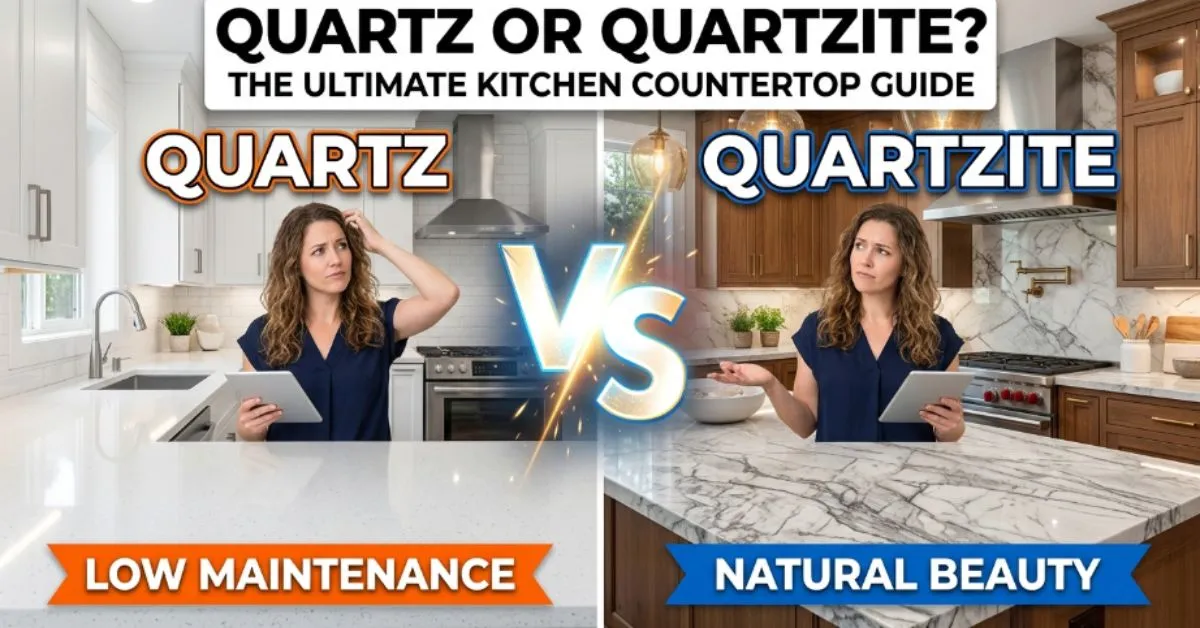
I still remember the day I started planning my kitchen remodel. I had spent hours browsing beautiful countertop photos online, and two names kept showing up everywhere: quartz and quartzite. At first, I honestly thought they were just different ways of saying the same thing. The names looked almost identical, and many of the countertops seemed to have the same elegant appearance.
The confusion got even worse when I visited a local showroom. One salesperson recommended quartz because it was easy to maintain, while another suggested quartzite because it was a natural stone. That’s when I realized I had no idea what the actual difference was. I didn’t want to spend thousands of dollars on the wrong countertop simply because I misunderstood the names.
So, I started researching. I compared materials, asked experts questions, and learned how each option performs in real homes. What I discovered surprised me. Even though quartz and quartzite sound very similar, they are completely different materials with different benefits, maintenance needs, and costs.
If you’ve ever found yourself wondering if quartz or quartzite is the better choice, you’re not alone. In this guide, I’ll break everything down in simple terms so you can confidently choose the right option without making the same mistake I almost did.
⚡ Quartz or Quartzite – Quick Answer
Quartz and quartzite are not the same material.
- Quartz is an engineered stone made from natural quartz crystals mixed with resins and pigments.
- Quartzite is a natural stone formed from sandstone through heat and pressure over millions of years.
Quick Examples
- A low-maintenance kitchen countertop? → Quartz
- A natural stone look with unique patterns? → Quartzite
- A surface that never needs sealing? → Quartz
🤔 Why Do People Confuse Quartz and Quartzite?
The main reason people confuse quartz and quartzite is their names.
Both words begin with “quartz,” making them sound like different versions of the same material. In reality, they are produced in completely different ways.
Other reasons for confusion include:
- Similar appearance from a distance.
- Both are popular countertop materials.
- Both contain quartz minerals.
- Many showroom displays place them side by side.
For most buyers, the names alone create uncertainty. That’s why understanding how each material is made is the easiest way to remember the difference.
📜 The Origin of Quartz and Quartzite
Quartz
Quartz is one of the most common minerals found on Earth. The word comes from the German word “Quarz.”
Natural quartz crystals have been used for centuries in jewelry, watches, and decorative items.
Modern quartz countertops are engineered products. Manufacturers crush natural quartz and combine it with resins and pigments to create durable slabs.
Quartzite
Quartzite is a naturally occurring metamorphic rock.
It begins as sandstone. Over millions of years, intense heat and pressure transform the sandstone into quartzite.
Because it is formed naturally, every slab of quartzite is unique. No two pieces look exactly alike.
🌍 British vs American English
Unlike words such as “color” and “colour,” there is no major spelling difference between quartz and quartzite in British and American English.
| Material | American English | British English |
| Quartz | Quartz | Quartz |
| Quartzite | Quartzite | Quartzite |
Both countries use the same spelling.
The difference is not regional spelling. The difference is the material itself.
🎯 Which One Should You Use?
The answer depends on your needs.
Choose Quartz If:
- You want low maintenance.
- You dislike sealing stone surfaces.
- You prefer consistent patterns.
- You need many color options.
- You want a modern look.
Choose Quartzite If:
- You love natural stone.
- You want unique veining.
- You don’t mind occasional sealing.
- You prefer a high-end natural appearance.
- You want exceptional heat resistance.
From a Blogging and SEO Perspective
If you’re writing for a U.S. audience, use the correct term carefully.
Many people search:
- Quartz vs quartzite
- Quartz or quartzite countertops
- Difference between quartz and quartzite
- Is quartzite better than quartz?
Using accurate terminology helps build trust and improves SEO performance.
❌ Common Mistakes (Avoid These!)
Mistake #1: Thinking They Are the Same Material
❌ Quartz and quartzite are identical.
✅ Quartz is engineered. Quartzite is natural stone.
Mistake #2: Assuming Quartzite Requires No Maintenance
❌ Quartzite never needs sealing.
✅ Quartzite usually requires periodic sealing.
Mistake #3: Believing Quartz Is Fully Natural
❌ Quartz countertops are completely natural.
✅ Quartz countertops are engineered using natural quartz and resins.
Mistake #4: Judging Only by Appearance
❌ If it looks natural, it must be quartzite.
✅ Some quartz designs closely mimic natural stone.
Mistake #5: Ignoring Heat Resistance
❌ Both materials handle heat exactly the same.
✅ Quartzite generally tolerates heat better than quartz.
📝 Real Life Examples
In Emails
“After reviewing the samples, we’ve decided to install quartz countertops in the kitchen.”
“The designer recommended quartzite for its natural appearance.”
On Social Media
“We finally chose quartz for our dream kitchen renovation!”
“Our new quartzite island looks absolutely stunning.”
In News Articles
“Quartz countertops continue to gain popularity among homeowners.”
“Luxury homes increasingly feature quartzite surfaces in kitchens and bathrooms.”
In Formal Writing
“Quartz is an engineered surface known for durability and easy maintenance.”
“Quartzite is a natural metamorphic stone valued for its unique patterns.”
📊 Quick Comparison Table
| Feature | Quartz | Quartzite |
| Type | Engineered stone | Natural stone |
| Origin | Quartz crystals + resin | Metamorphic rock |
| Appearance | Consistent | Unique natural patterns |
| Maintenance | Low | Moderate |
| Sealing Needed | No | Usually yes |
| Heat Resistance | Good | Excellent |
| Durability | Very durable | Very durable |
| Popular Use | Kitchens, bathrooms | Luxury countertops |
| Region | Worldwide | Worldwide |
FAQs ❓
Q. Is quartz better than quartzite?
Neither is universally better. Quartz offers easier maintenance, while quartzite provides a natural stone appearance.
Q. Is quartzite more expensive than quartz?
In many cases, yes. Quartzite can cost more due to quarrying and transportation expenses.
Q. Does quartzite stain easily?
Quartzite is relatively resistant to stains, but sealing helps protect it.
Q. Can quartzite look like marble?
Yes. Many quartzite slabs have veining that closely resembles marble.
Q. Does quartz require sealing?
No. Quartz countertops are non-porous and generally do not require sealing.
Q. Which is stronger, quartz or quartzite?
Both are durable, but quartzite is often considered slightly harder due to its natural stone composition.
Q. Is quartzite a natural stone?
Yes. Quartzite forms naturally over millions of years through geological processes.
Q. Which is best for busy families?
Quartz is often preferred because it requires less maintenance and cleaning.
Conclusion 🎯
Choosing between quartz and quartzite becomes much easier once you understand the key difference.
Quartz is an engineered material made from natural quartz crystals combined with resins. It offers excellent durability, a wide range of colors, and very little maintenance. For busy households, it is often one of the easiest countertop materials to live with.
Quartzite, on the other hand, is a natural stone created through geological processes over millions of years. It provides unique beauty, distinctive veining, and outstanding heat resistance. Every slab tells its own story, making it a favorite for homeowners who love natural materials.
The biggest mistake people make is assuming the two materials are interchangeable simply because their names sound alike. In reality, they serve different needs and preferences.
If you want convenience and consistency, choose quartz. If you want natural beauty and one of a kind patterns, choose quartzite.
Remember this simple tip: Quartz is engineered. Quartzite is natural. Once you know that, you’ll never confuse quartz and quartzite again.

I’m Veronica Roth, an author at GrammarGuides.com, where I make English easy to understand. As a grammar expert, I help readers master spelling, punctuation, and common language mistakes.