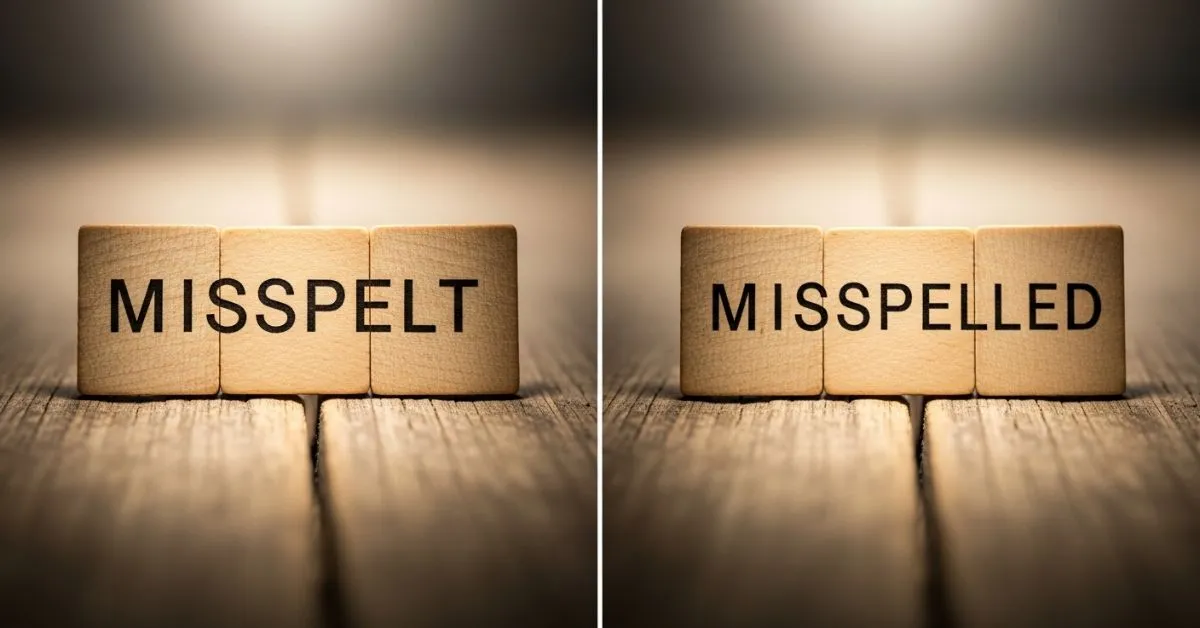
I remember typing a sentence once: “I think this word is misspelt.” Then I paused. Something didn’t feel right. I had also seen “misspelled” many times online. So which one was correct? Or were both right?
This is exactly why people search for “misspelt or misspelled.” The confusion comes from different English styles. Some spellings change depending on if you use British English or American English. And if you write for a global audience, it can get even more confusing.
In this guide, I’ll clear it up in a simple way. You’ll learn the correct usage, the difference between regions, and how to avoid mistakes. By the end, you won’t hesitate again when choosing between misspelt and misspelled.
✅ Misspelt or Misspelled – Quick Answer
Both misspelt and misspelled are correct.
- Misspelled → Used in American English
- Misspelt → Used in British English
👉 Examples:
- US: You misspelled my name.
- UK: You misspelt my name.
Both words mean the same thing: to spell a word incorrectly.
📜 The Origin of Misspelt or Misspelled
The word comes from:
- “miss” (wrongly)
- “spell” (to write letters correctly)
In older English, verbs often had different past forms. British English kept shorter forms like:
- spelt
- dreamt
- learnt
American English later simplified many of these:
- spelled
- dreamed
- learned
That’s why both misspelt and misspelled exist today.
🌍 British English vs American English Spelling
English spelling changes based on region. Here’s how they compare:
| British English | American English |
| misspelt | misspelled |
| spelt | spelled |
| dreamt | dreamed |
| learnt | learned |
👉 Key idea:
- British English often uses -t endings
- American English prefers -ed endings
🎯 Which Spelling Should You Use?
It depends on your audience:
- 🇺🇸 For US audience → Use misspelled
- 🇬🇧 For UK audience → Use misspelt
- 🌎 For global content (SEO/blogs) → Use misspelled (more common worldwide)
👉 Pro tip:
If you run a website targeting the US (like most SEO content), misspelled is the safer choice.
❌ Common Mistakes with Misspelt or Misspelled
Here are common errors people make:
| Wrong Usage | Correct Version |
| misspeled | misspelled |
| mispelt | misspelt |
| missspell | misspell |
| misspellt | misspelt |
👉 Tip:
Always double-check the double “s” and double “l” in misspell.
💬 Misspelt or Misspelled in Everyday Examples
Here’s how people use these words in real life:
📧 Emails
- “Sorry, I misspelled your name in the document.”
📰 News
- “The headline was misspelt and quickly corrected.”
📱 Social Media
- “Oops, I misspelled that word 😂”
📄 Formal Writing
- “The term was misspelled in the original report.”
📊 Misspelt or Misspelled – Google Trends & Usage Data
- Misspelled is more popular globally
- High usage in: United States, Canada
- Misspelt is more common in: UK, Australia, New Zealand
👉 SEO insight:
- “Misspelled” has higher search volume
- “Misspelt” has lower competition but regional use
Best strategy:
- Use misspelled as main keyword
- Mention misspelt for broader reach
🔍 Keyword Comparison Table
| Keyword Variation | Region | Usage Frequency |
| misspelled | US | High |
| misspelt | UK | Medium |
| misspell | Global | High |
| misspelling | Global | Very High |
FAQs❓
1. Is misspelt wrong?
No, it’s correct in British English.
2. Is misspelled more common?
Yes, it is more widely used worldwide.
3. Which should I use for SEO?
Use misspelled for better reach.
4. Do both words mean the same thing?
Yes, both mean spelling a word incorrectly.
5. Is misspelt outdated?
No, it is still used in UK English.
6. Can I use both in one article?
Yes, especially for global audiences.
7. Why are there two spellings?
Because of differences between British and American English.
Conclusion
Both misspelt and misspelled are correct. The only difference is where you use them. British English prefers misspelt, while American English uses misspelled. That’s it.
If you write for a global or US audience, it’s best to choose misspelled. It’s more common and easier for readers to recognize. But if your audience is in the UK or follows British English rules, misspelt is perfectly fine.
The key is consistency. Don’t mix both styles randomly in the same content. Pick one based on your audience and stick with it.
Now, the next time you type this word, you won’t pause or second-guess yourself. You’ll know exactly which one to use and why.
Discover More Articles:
- Dilemna or Dilemma : Here’s the Easy Rule🤯(2026)
- Taught or Tought : Here’s the Only Correct Answer🔥(2026)
- Propper or Proper : Correct Spelling Explained in Seconds✍️(2026)

I’m Franz Kafka, an author at GrammarGuides.com, where I simplify English grammar for readers. As a grammar expert, I guide you through tricky rules and common mistakes.