I remember typing a quick message: “Please tye your shoes before you leave.” I paused. Something didn’t look right. Was it tye or tie? The word sounded simple, but the spelling made me unsure.
If you’ve ever had this confusion, you’re not alone. Many writers, students, and professionals search for “tye or tie” because the words sound the same, but only one is correct in standard English. This confusion often happens when people rely on pronunciation instead of spelling rules.
A small mistake like this can show up in emails, blog posts, or even professional writing. It may seem minor, but it can affect how clear and polished your writing looks. The good news? The rule is very simple once you understand it.
In this guide, I’ll explain the correct spelling, its origin, and how to use it properly so you can write with confidence every time.
Tye or Tie – Quick Answer
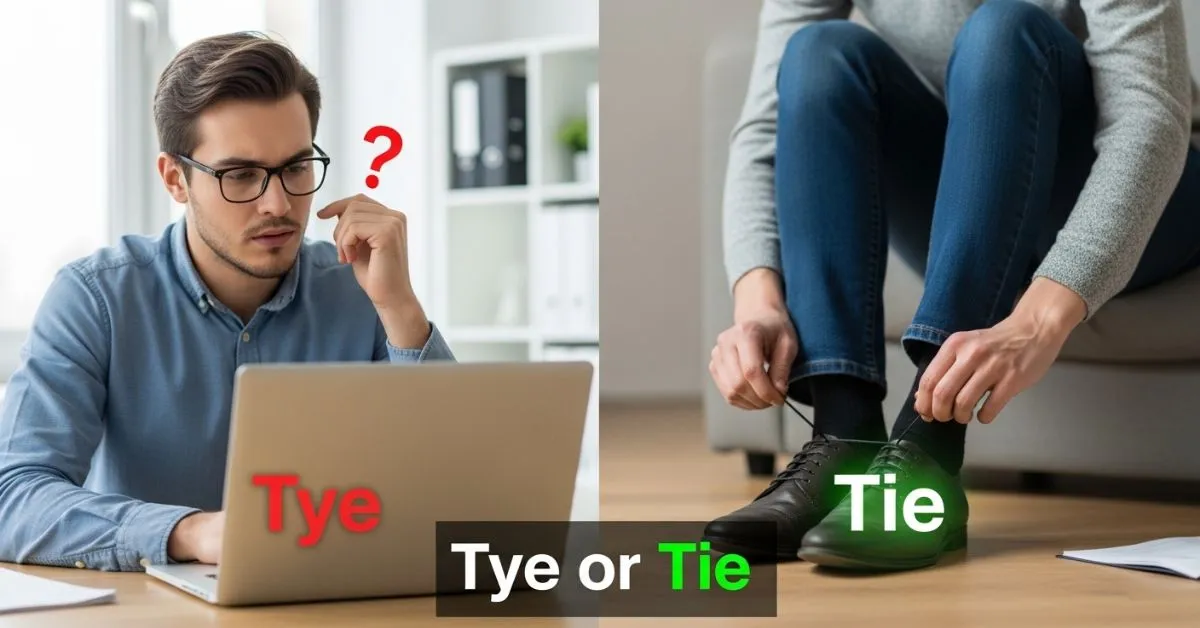
The correct spelling is “tie.”
✅ Tie → Correct (means to fasten, connect, or draw level)
❌ Tye → Incorrect spelling
Examples:
- Please tie your shoes.
- The game ended in a tie.
Simple rule: Always use tie, never tye.
The Origin of Tye or Tie
The word tie comes from Old English tīgan, meaning “to fasten or bind.”
Over time, its meaning expanded:
- To fasten (tie a knot)
- To connect (tie two things together)
- To draw (tie in a game)
The spelling tie has stayed consistent in English.
The incorrect form tye likely appeared because people tried to spell the word based on how it sounds. However, it is not recognized in standard English.
British English vs American English Spelling
There is no difference between US and UK English.
| Feature | Tie (Correct) | Tye (Incorrect) |
| US English | ✅ Standard | ❌ Incorrect |
| UK English | ✅ Standard | ❌ Incorrect |
| Meaning | Fasten / draw | ❌ Not valid |
| Professional Writing | ✅ Yes | ❌ No |
Examples:
- US: He tied the rope tightly.
- UK: The match ended in a tie.
👉 Both regions use tie.
Which Spelling Should You Use?
The answer is simple:
- United States → Use tie
- United Kingdom / Commonwealth → Use tie
- Global writing → Always use tie
🚫 Avoid tye in all situations.
Tip: If you’re unsure, remember:
tie = correct, tye = mistake
Common Mistakes with Tye or Tie
Here are frequent errors:
- ❌ Writing tye instead of tie
✔ Correct: tie - ❌ Spelling based on sound
✔ Follow standard spelling - ❌ Thinking both are correct
✔ Only tie is valid
👉 Memory trick:
“Tie your tie” – both use the same correct spelling.
✍️ Tie in Everyday Examples
Emails
“Please tie the files together before sending.”
News
“The match ended in a tie after extra time.”
Social Media
“Learn how to tie a perfect knot 🎀”
Formal Writing
“The results show a statistical tie between both groups.”
📊 Tye or Tie – Google Trends & Usage Data
Search patterns show clear trends:
- Tie dominates global usage
- Tye appears mostly as a spelling mistake
- High search volume comes from the US, UK, Canada, and Australia
- Many users search this keyword to confirm correct spelling
👉 This proves tie is the correct and accepted form worldwide.
Keyword Comparison Table
| Word | Correct? | Usage |
| tie | ✅ Yes | Fasten, connect, draw |
| tye | ❌ No | Spelling mistake |
FAQs❓
1. Is it tye or tie?
The correct spelling is tie.
2. What does tie mean?
It means to fasten, connect, or finish equally.
3. Is tye ever correct?
No. It is always a spelling mistake.
4. Why do people write tye?
Because they spell it based on pronunciation.
5. Is tie used in professional writing?
Yes. It is standard and widely accepted.
6. Is there a US vs UK difference?
No. Both use tie.
7. How can I remember the spelling?
Think: “Tie your shoes” – always tie.
Conclusion
The confusion between tye and tie usually comes from how the word sounds. Since English pronunciation can be tricky, many people assume different spellings are acceptable. However, standard English only recognizes tie as the correct form.
The word tie is simple but widely used. It can mean fastening something, connecting ideas, or even ending a game with equal scores. Because it appears in everyday communication, using the correct spelling is important for clear and professional writing.
On the other hand, tye is not a valid word in standard English. It is a common spelling mistake and should be avoided in all types of writing. Using it can make your content look less accurate and less polished.
Another key point is that there is no regional difference here. Both American and British English use tie, making it the correct choice worldwide. This makes things easier you only need to remember one spelling.
Final tip: Always use tie. It’s simple, correct, and accepted everywhere.

I’m Dan Brown, an author behind GrammarGuides.com, where I share simple tips to help people write English clearly and correctly. As a grammar expert, I enjoy explaining tricky words, spelling differences, and common language mistakes in an easy way.