I remember writing a caption for a photo of the sun and typing, “The sun is shinning brightly.” At first, it looked fine. But when I read it again, something felt off. I paused and thought, wait… is it shinning or shining? The word sounded simple, but the spelling made me unsure.
If you’ve ever had the same confusion, you’re not alone. Many writers, students, and bloggers search for “shinning or shining” because both versions appear online. The confusion usually comes from how we form words by adding “-ing.” Sometimes we double letters, and sometimes we don’t. That’s where mistakes happen.
I decided to check grammar rules and dictionaries to be sure. The answer turned out to be simple: one spelling is correct in most situations, while the other is rare and used in a different meaning. In this guide, I’ll explain the correct spelling, its origin, and how to use it properly in everyday and professional writing.
✅ Shinning or Shining – Quick Answer
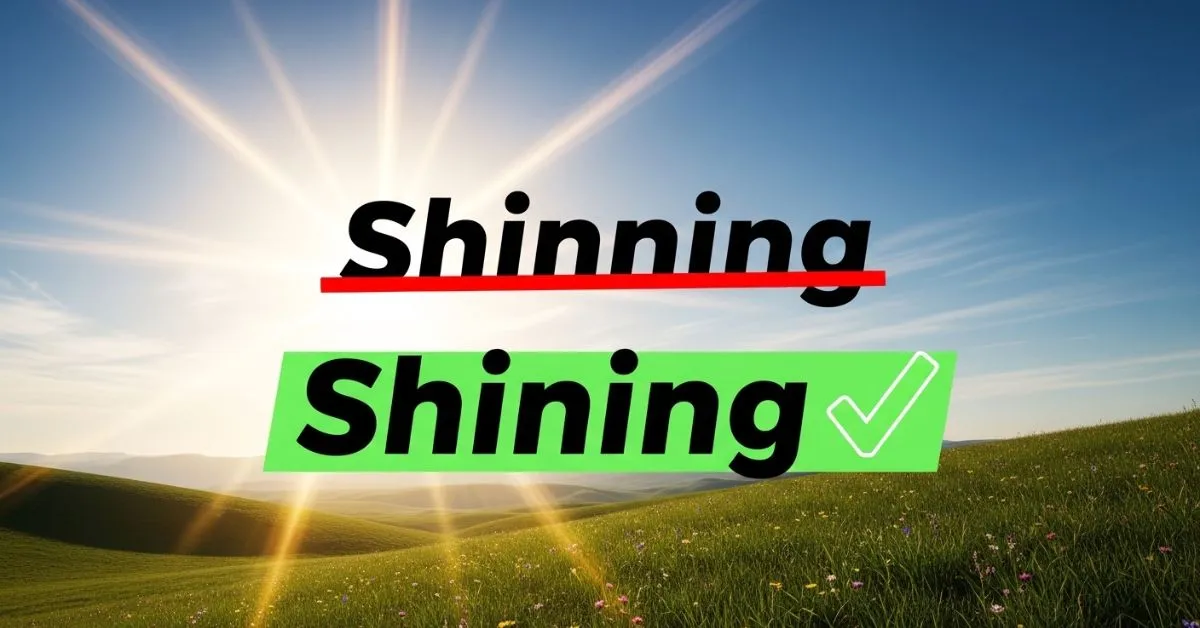
The correct spelling is “shining.”
- ✅ Shining – Correct spelling. Means giving light or glowing.
- ⚠️ Shinning – Rare word with a different meaning (climbing using legs).
Examples:
- The stars are shining in the sky.
- Her face was shining with happiness.
👉 Simple rule: Use shining for light or brightness.
The Origin of Shinning or Shining
The word shining comes from the verb “shine.”
When adding “-ing,” English rules apply.
Rule:
- If a verb ends in “e,” drop the “e” before adding “-ing.”
So:
- shine + ing → shining (correct)
The word shinning does exist, but it comes from a different verb:
- “to shin” → meaning to climb using hands and legs (like climbing a rope)
This is why shinning is rare and often confused with shining.
British English vs American English Spelling
There is no difference between US and UK English for this word.
| Feature | Shining (Correct) | Shinning (Different Meaning) |
| US English | ✅ Standard | ⚠️ Rare |
| UK English | ✅ Standard | ⚠️ Rare |
| Dictionary Recognition | ✅ Yes | ⚠️ Yes (different meaning) |
| Professional Writing | ✅ Acceptable | ❌ Not used for light |
Examples:
- US: The sun is shining brightly.
- UK: The stars are shining tonight.
👉 Both regions use shining for brightness.
Which Spelling Should You Use?
Choose based on meaning:
- United States: Use shining
- United Kingdom / Commonwealth: Use shining
- Global writing: Use shining
⚠️ Use shinning only when talking about climbing (very rare).
👉 For most writing, always choose shining.
Common Mistakes with Shinning or Shining
Here are common errors:
- ❌ Writing shinning instead of shining
✔ Correct: shining - ❌ Doubling the “n” incorrectly
✔ Only one “n” in shining - ❌ Confusing meanings
✔ Shining = light
✔ Shinning = climbing
👉 Tip: Drop the “e” → shine → shining
Shining in Everyday Examples
Emails
“Your performance is shining this quarter.”
News
“The sun was shining across the city.”
Social Media
“Keep shining ✨”
Formal Writing
“The results show a shining example of success.”
Shinning or Shining – Google Trends & Usage Data
Search data shows a clear pattern.
Google Trends insights:
- Shining is searched far more often worldwide
- Shinning appears mostly in spelling mistakes or niche uses
- Top searches come from the US, UK, Canada, and Australia
- Many users search this keyword to confirm correct spelling
👉 This proves shining is the standard spelling globally.
Keyword Comparison Table
| Word | Correct? | Usage |
| shining | ✅ Yes | Light, glowing, success |
| shinning | ⚠️ Rare | Climbing using legs |
FAQs❓
1. Is it shinning or shining?
The correct spelling is shining.
2. What does shining mean?
It means giving light or glowing.
3. Is shinning ever correct?
Yes, but only when referring to climbing.
4. Why do people write shinning?
Because they think the “n” should be doubled.
5. Is shining the same in US and UK English?
Yes. Both use shining.
6. How can I remember the spelling?
Drop the “e” → shine → shining.
7. Is shining used in professional writing?
Yes. It is widely accepted and used.
Conclusion
The confusion between shinning and shining usually comes from spelling rules and pronunciation. Since many English words double letters when adding “-ing,” writers sometimes assume the same applies here. However, the correct form is shining, where the final “e” in “shine” is dropped before adding “-ing.”
The word shinning does exist, but it has a completely different meaning. It refers to climbing using hands and legs and is rarely used in everyday writing. This is why most writers never need to use it. In almost all situations, especially when describing light, brightness, or success, shining is the correct choice.
There is also no difference between British and American English for this word. Both use shining, making it the safe option for global writing. To keep your writing clear and professional, always choose shining unless you are specifically referring to climbing. Remember this simple rule, and you’ll never get confused again.

I’m Dan Brown, an author behind GrammarGuides.com, where I share simple tips to help people write English clearly and correctly. As a grammar expert, I enjoy explaining tricky words, spelling differences, and common language mistakes in an easy way.