I remember writing a farming article and typing, “Farmers use a plough to prepare the soil.” It looked fine… but then I paused. Should it be plow instead? I had seen both spellings online, especially in US and UK websites. That’s when the confusion hit.
If you’ve ever wondered “plow or plough,” you’re not alone. Many writers, students, and bloggers search for this keyword because both spellings are correct but used in different regions. The difference comes from British vs American English, not meaning.
This confusion can affect blog posts, academic writing, and even SEO content. Choosing the wrong version for your audience may make your writing feel inconsistent or less natural.
The good news? The rule is simple. In this guide, I’ll explain the correct spelling, its origin, and how to use it properly in everyday and professional writing.
Plow or Plough – Quick Answer
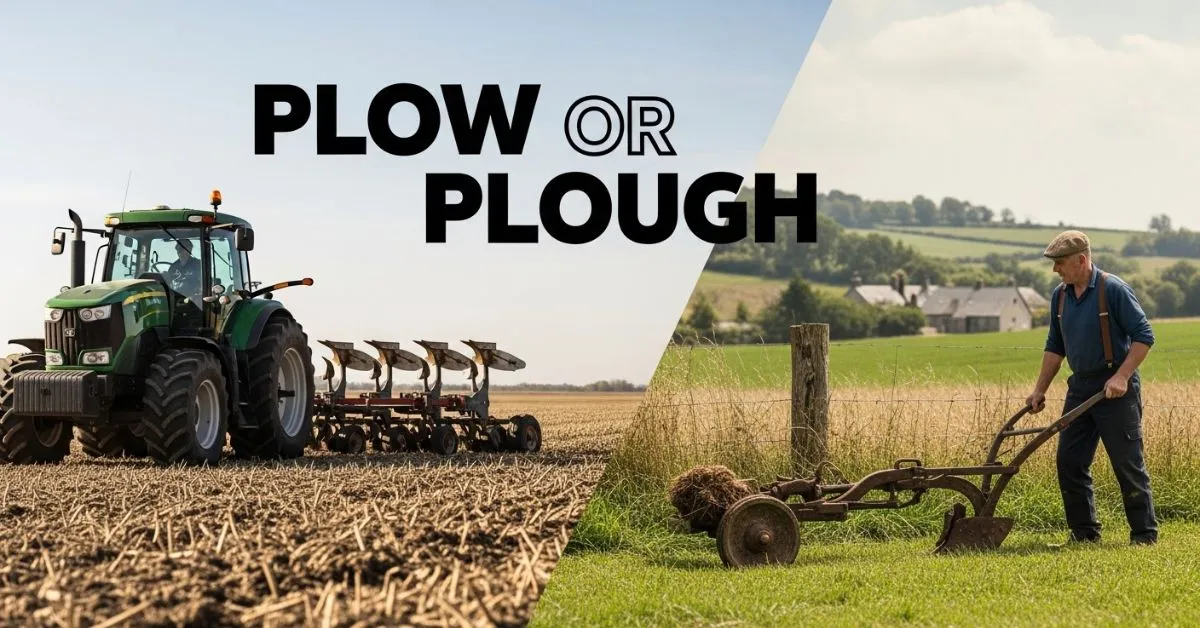
Both spellings are correct but used in different regions.
- ✅ Plow → American English
- ✅ Plough → British English
Examples:
- US: Farmers use a plow to prepare the field.
- UK: Farmers use a plough to prepare the field.
Simple rule:
US = plow
UK = plough
The Origin of Plow or Plough
The word comes from Old English “plōh”, which referred to a farming tool used to turn soil.
Over time:
- British English kept the older spelling plough
- American English simplified it to plow
This follows a common pattern:
- colour → color
- favour → favor
- plough → plow
👉 The meaning stayed the same, but spelling changed by region.
British English vs American English Spelling
The main difference is regional usage.
| Feature | Plow | Plough |
| US English | ✅ Standard | ❌ Rare |
| UK English | ⚠️ Less common | ✅ Standard |
| Meaning | Same | Same |
| Farming Context | ✅ Yes | ✅ Yes |
| Professional Writing | ✅ Yes | ✅ Yes |
Examples:
- US: The farmer bought a new plow.
- UK: The farmer repaired his plough.
👉 Both mean the same thing: a tool used to turn soil.
Which Spelling Should You Use?
Choose based on your audience:
- United States: Use plow
- United Kingdom / Commonwealth: Use plough
- Global writing: Use plow (simpler and more widely used online)
Best tip:
For international or SEO content, use plow.
Common Mistakes with Plow or Plough
Here are frequent errors:
- ❌ Mixing both spellings in one article
✔ Choose one style and stay consistent - ❌ Using “plough” for a US audience
✔ Use plow - ❌ Thinking one spelling is wrong
✔ Both are correct
Tip:
Keep your audience in mind when choosing.
Plow or Plough in Everyday Examples
Emails
“The company sells modern plow equipment.”
News
“Farmers are using new plough technology this season.”
Social Media
“Time to plow the fields 🌾”
Formal Writing
“The plow is essential for soil preparation.”
📊 Plow or Plough – Google Trends & Usage Data
Search trends show clear patterns:
- Plow dominates in the United States
- Plough is more common in the UK and some Commonwealth countries
- Plow is widely used in global SEO and online content
- Farming and agriculture searches use both, depending on region
👉 This shows:
- Plow = global + modern usage
- Plough = regional + traditional usage
Keyword Comparison Table
| Word | Correct? | Usage |
| plow | ✅ Yes | US English, global writing |
| plough | ✅ Yes | UK English, traditional use |
FAQs❓
1. Is it plow or plough?
Both are correct. It depends on your region.
2. Which spelling is used in America?
Americans use plow.
3. Is plough wrong?
No. It is correct in British English.
4. Do both words mean the same thing?
Yes. Both refer to a farming tool or the act of turning soil.
5. Which spelling is better for SEO?
Plow is better for global audiences.
6. Can I use both in one article?
No. Choose one style and stay consistent.
7. What about modern writing?
Most global content prefers plow.
Conclusion
The confusion between plow and plough comes from regional spelling differences. Both words mean the same thing and refer to a farming tool used to turn soil. The only real difference is where each spelling is used.
Plow is the standard form in American English and is widely used in global content. It is simpler, shorter, and more common in online writing. On the other hand, plough is the traditional British spelling and is still used in the UK and some Commonwealth countries.
There is no right or wrong choice, but using the correct version for your audience is important. Mixing both spellings in one piece can confuse readers and make your writing look inconsistent. That’s why it’s best to pick one style and stick with it.
If you want a safe option for international readers, go with plow. It is clear, modern, and widely accepted. By understanding this simple difference, you can write more confidently and professionally every time.