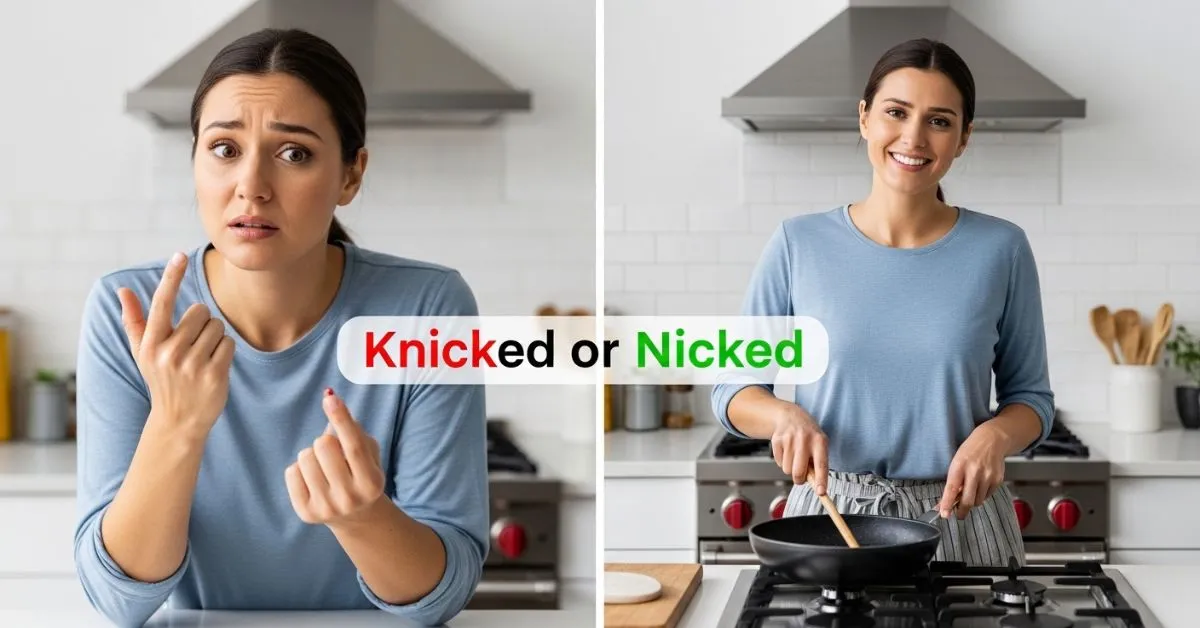
I remember writing a quick message: “I knicked my finger while cooking.” I paused. Something didn’t look right. Was it knicked or nicked? Both seemed familiar, and that made it confusing.
If you’ve ever had this moment, you’re not alone. Many writers search for “knicked or nicked” because the words sound the same and look very similar. The confusion often comes from pronunciation and the related word “knick-knack,” which makes people think “knicked” might be correct.
This small spelling mistake can show up in emails, blogs, and even professional writing. While it may seem minor, it can affect how clear and polished your writing looks.
The good news? The rule is simple once you understand it. In this guide, I’ll explain the correct spelling, its origin, and how to use it properly so you can write with confidence every time.
Knicked or Nicked – Quick Answer
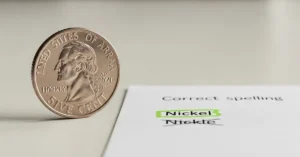
The correct spelling is “nicked.”
- ✅ Nicked → Correct (past tense of nick, meaning a small cut or slight damage)
- ❌ Knicked → Incorrect spelling
Examples:
- I nicked my finger while cutting vegetables.
- The car door got nicked in the parking lot.
👉 Simple rule: Always use nicked, never knicked.
The Origin of Knicked or Nicked
The word nick comes from Old English and related Germanic roots, meaning a small cut, notch, or mark.
Over time, it developed meanings like:
- A small cut or injury
- Slight damage
- A precise moment (“in the nick of time”)
When forming the past tense:
- nick → nicked ✅
The incorrect form knicked likely comes from confusion with “knick-knack,” but it is not a standard spelling.
British English vs American English Spelling
There is no difference between US and UK English for this word.
| Feature | Nicked (Correct) | Knicked (Incorrect) |
| US English | ✅ Standard | ❌ Incorrect |
| UK English | ✅ Standard | ❌ Incorrect |
| Meaning | Small cut/damage | ❌ Not valid |
| Professional Writing | ✅ Yes | ❌ No |
Examples:
- US: He nicked himself while shaving.
- UK: She nicked the edge of the table.
👉 Both regions use nicked.
Which Spelling Should You Use?
The answer is simple:
- United States: Use nicked
- United Kingdom / Commonwealth: Use nicked
- Global writing: Always use nicked
🚫 Avoid knicked in all situations.
Tip:
nick → nicked (just add “-ed”)
Common Mistakes with Knicked or Nicked
Here are frequent errors:
- ❌ Writing knicked
✔ Correct: nicked - ❌ Confusing with “knick-knack”
✔ That word is different - ❌ Spelling based on sound
✔ Follow correct spelling rules
Memory trick:
Nick = cut → nicked (simple)
Knicked or Nicked in Everyday Examples
Emails
“I accidentally nicked the product while opening it.”
News
“The player nicked his hand during the game.”
Social Media
“Ouch! I nicked my finger 😅”
Formal Writing
“The material was slightly nicked during testing.”
📊 Knicked or Nicked – Google Trends & Usage Data
Search trends show a clear pattern:
- Nicked dominates global usage
- Knicked appears mostly as a spelling mistake
- High search volume comes from the US, UK, Canada, and Australia
- Many users search this keyword to confirm the correct spelling
👉 This proves:
- Nicked = correct and standard
- Knicked = common error
Keyword Comparison Table
| Word | Correct? | Usage |
| nicked | ✅ Yes | Small cut or damage |
| knicked | ❌ No | Spelling mistake |
FAQs❓
1. Is it knicked or nicked?
The correct spelling is nicked.
2. What does nicked mean?
It means a small cut, notch, or slight damage.
3. Is knicked ever correct?
No. It is always a spelling mistake.
4. Why do people write knicked?
Because they confuse it with “knick-knack.”
5. Is nicked used in professional writing?
Yes. It is standard and widely accepted.
6. Is there a US vs UK difference?
No. Both use nicked.
7. How can I remember the spelling?
Think: nick → nicked (simple and correct).
Conclusion
The confusion between knicked and nicked usually comes from how similar the words sound. Since English has many words with silent letters, it’s easy to assume that “knicked” might be correct. However, standard English clearly uses nicked as the correct spelling.
The word nicked refers to a small cut, slight damage, or minor mark. It is commonly used in everyday conversations, professional writing, and even news reports. On the other hand, knicked is not a recognized standard word and should be avoided in all types of writing.
Another important point is that there is no difference between British and American English here. Both use nicked, making it the correct choice worldwide. Whether you are writing emails, blog posts, or formal documents, using the right spelling ensures clarity and professionalism.
To stay confident, just remember one simple rule:
👉 Nick → Nicked (no “k”)
Once you keep this in mind, you’ll never make this mistake again.